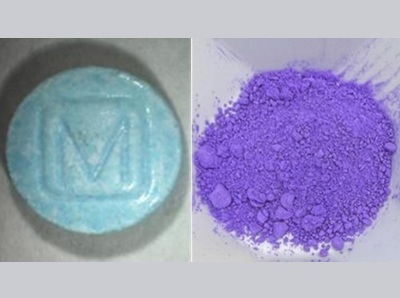
Tablet from the May 2025 batch (left) and powder from the September 2025 batch (right). Credit: CFSRE
Analyzing blue “M30” tablets—typically sold as fentanyl—seized from the U.S. Southwest border, the Center for Forensic Science Research and Education (CFSRE) found something unexpected: carfentanyl.
While the small blue pills have become synonymous with fentanyl, the new analysis further shows the escalating variability in the illicit drug supply, including counterfeit tablets and powders.
Carfentanil is an analog of the manmade opioid fentanyl. It is highly regulated and not intended or approved for use on humans. The drug is 100 times more powerful than fentanyl and 10,000 times more potent than morphine. A lethal dose of carfentanil in humans would be at the nanogram level—much smaller than the 2 mg of fentanyl that poses fatal.
Tablets
Under the SENTINEL program, CFSRE analyzes seized tablets and powders suspected of containing fentanyl using a surveillance and profiling workflow that includes microscopic imaging, GC/MS, LC-QTOF-MS for qualitative identification, and LC-MS/MS for quantitative analysis.
In May 2025, individual exhibits of both powders and tablets began testing positive for carfentanil. The first batch contained 30 blue tablets seized from the Southwest Border. The second, which arrived in August, contained 30 additional tablets seized from the same location.
The supposed fentanyl pills in the May batch contained on average of 0.03 mg/tablet of carfentanil with a range of 0.01-0.15 mg/tablet, while tablets in the August batch contained 0.02 mg/tablet with a range of 0.017- 0.024 mg/tablet. Critically, none of the tablets in either case contained any fentanyl—carfentanil was the only opioid present.
Powders
Around the same time, CFSRE also received powder samples for analysis.
The June 2025 samples, a violet purple powder contained fentanyl as the predominant compound (16.34%), with lower percent purities of lidocaine (0.52%), xylazine (0.39%), and carfentanil (0.31%).
Meanwhile, the September samples, a light-colored purple powder, showed fentanyl as the predominant compound, though at a lower percent purity (1.01%), with additional compounds present at lower levels, including lidocaine (0.12%), xylazine (0.11%), and carfentanil (0.04%).
Unlike the tablets, the powders were mainly fentanyl as a buyer would expect; however, the concentrations ranged from 1% and 16% by weight. This variability makes it impossible for people who use drugs to anticipate the strength of what they are purchasing, which contributes to overdose deaths.
The carfentanil content in the powders also varied dramatically, however, its mere presence markedly increases the risk of fatal outcomes.
“Forensic laboratories must maintain consistent testing and reporting of all opioids present in seized materials, even when large quantities of less potent opioids are present,” said CFSRE in a public alert. “Substances such as carfentanil and the newly emergent Orphines highlight the importance of this comprehensive approach.”