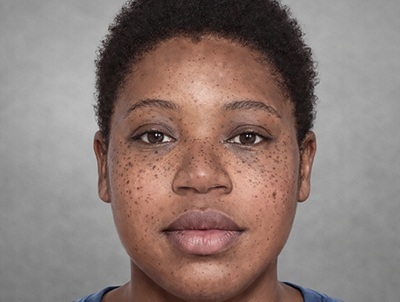
The Kayaker. Credit: VPD
Forensic analysis of pollen has revealed new clues as to where a Jane Doe spent her last days before her body was discovered in the English Bay (British Columbia, Canada) in 2022.
With the new evidence, the Vancouver Police Department (VPD) is renewing its appeal for help in identifying the woman. The department has released an updated video featuring the new forensics, an interview with the tugboat captain that found the woman, and traveled to Seattle to introduce the case to U.S. audiences—a further appeal for public assistance.
“When we go before the public in Seattle and Portland, our hope is that someone is going to see it and know something and give us that one piece of information that solves this case and identifies this young lady,” said Sargeant Anton Schamberger of VPD’s Missing Persons Unit.
Case background
On Sept. 29, 2022, at approximately 9:00 p.m., tugboat captain Jonas Grey noticed debris in the water on his route to pick up a barge. On alert, Grey and crewmates eventually saw what they thought could be a body floating in the water. As they maneuvered closer, Grey and team were able to move her body to the shore, where first responders resuscitated her. However, the police were notified the next morning that she did not make it.
The woman, who was wearing a life jacket, was found near an inflatable kayak, with a backpack that contained candy and insulin but no identification. She is believed to be in her thirties and of African descent.
“We initially assumed someone was going to report her. If it’s not family, it’s her workplace. We then moved into the idea that maybe she’s a tourist and is expected to check out of her hotel,” said Detective Rebecca Matson of VPD’s Missing Persons Unit.
But none of those situations came to fruition. Days turned to weeks, weeks turned to months, and months turned to years while the woman remained unidentified and never reported missing.
New forensic analysis
In April 2025, Schamberger attended the Missing and Unidentified Human Remains conference where he learned that pollen analysis can be used for geographic purposes. The technique immediately struck a chord with him, given the assumption that “the kayaker” was indeed from outside of Canada.
The woman’s backpack and sweater were sent for testing at the U.S. Customs and Border Protection (CBP) Laboratory in Chicago, who completed the analysis for free. In July, the CBP lab reported findings that indicated the pollen grains and fern spores on the woman’s sweater were from recent exposure to an urban environment within the Pacific Northwest, plausibly Seattle or Portland. The report also indicated a near total absence of pollen grains or fern spores from the Vancouver area— suggesting the woman is not from Vancouver but could have spent her last days in the Seattle or Portland areas.
Vancouver Police say this renewed initiative is to trigger memories, generate new leads and ultimately identify the woman so her family can be notified. Investigators hope the video and cross-border media will reach people who may recognize her, even if she was not originally from the Pacific Northwest or North America.