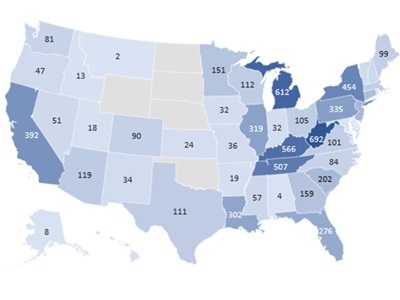
States reporting blood pFF 2020-2023. Credit: CFSRE
In 2016, there were four global reports of para-Fluorofentanyl (pFF) in the illicit drug supply. In 2020, scientists found 269 cases—but that jump was small given what happened next. By 2021 and 2022, scientists reported 2,803 and 2,346 cases of detected pFF, respectively. In 2023, there were 3,019 reported blood cases.
pFF is a fentanyl analogue, and is considered a narcotic analgesic. Laboratory studies have shown it is approximately 3x less potent than fentanyl, however, concentrations in drug deaths suggest that deaths can occur with concentrations similar to those involving fentanyl.
Additionally, pFF is rarely present without fentanyl as a co-adulterant. According to the Center for Forensic Science Research & Education (CFSRE), drug experts believe pFF is added to fentanyl to increase total drug volume for distribution, to dilute the drug being cut and to enhance the pharmacological effect.
For example, in a study at Fredric Rieders Family Foundation on the presence of toxic adulterants in heroin/fentanyl, methamphetamine and cocaine seized drugs cases in the United States (n=2,027), pFF was found in approximately 3% percent of the total exhibits and almost always found together with fentanyl (93% of the time). CNS stimulants, methamphetamine and/or cocaine were identified in 19 of the 60 cases, generally in addition to other opioids and adulterants. Of the 60 cases positive for pFF, there were only 4 cases where fentanyl was not detected—1 case was pFF only, 1 was pFF and tramadol, 1 was pFF and a fentanyl synthesis precursor, and the last case contained pFF and the novel opioid, N-Pyrrolidino Etonitazene (etonitazepyne).
Even though pFF would be considered contributory to any case in which fentanyl is present, the adulterant can be a cause of death in its own right in susceptible individuals even in the absence of other drugs.
Severe symptoms include sedation, coma and respiratory depression, which may progress to death. Naloxone administration and supporting breathing are still considered the best practice for treating pFF overdoses.
History and reemergence
pFF briefly infiltrated the drug market in the 1980’s and later re-emerged in 2016 during a period of fentanyl analogue proliferation. Following core-structure scheduling for fentanyl-related substances in 2018, overall fentanyl analogue positivity—including pFF—dropped dramatically. However, pFF started to re-appear again in seized drug materials and toxicology samples toward the end of 2020—this time largely in conjunction with illicit fentanyl.
“This potential shift may be related to the availability of para-fluoro 4-AP as a legal precursor subsequent to DEA scheduling of 4-AP, which was a commonly used precursor/intermediate for the manufacturing of illicit fentanyl,” explains a public health alerts issues by the CFSRE.
Last year, data shows positivity for pFF ranged from 2.5 to 3.4% in comprehensive testing of postmortem samples.
Data provided by CFSRE