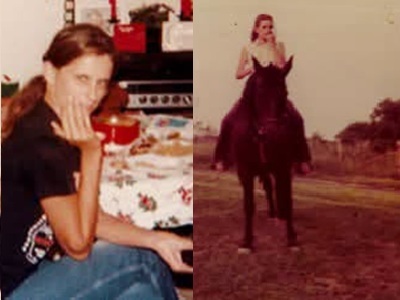
Mary Ellen “Mollie” McCullough. Credit: WSP
Thirty-five years after her disappearance, and 12 years after re-opening the case, investigators have now identified “Helen Doe,” a woman who perished in a truck accident but was unidentified until now.
Mary Ellen “Mollie” McCullough was born on March 26, 1957. Mollie’s father had been a truck driver and she loved to ride in the big rigs. In 1991, she left home to catch a ride and her family never heard from her again. Though troubled by her disappearance, her family was unable to get her name added to missing person’s lists. But when she did not show up for her grandmother or mother’s funerals in 1993 and 1994, family members had the strong suspicion that Mollie was gone forever.
That suspicion was accurate. On May 14, 1991, a two semi-truck collision occurred on southbound I-5 in Kalama, Wash. The collision resulted in a severe fire and the death of one of the drivers, Lester Harvel from Missouri, and a female passenger in one of the big rigs. Investigators were unable to identify the passenger. As Mount St. Helens was visible from the crash site, collision investigators chose “Helen Doe” as the name of the unidentified victim and “Helen” was buried in anonymity in an unmarked grave in Longview.
The Washington State Patrol (WSP) investigated the fatal crash and though there were few leads to Helen’s true identity in 1991, 23 years later, DNA forensics had vastly improved.
In 2014, two WSP detectives, retired Detective Greg Wilcoxson and Detective Sergeant Stacy Moate re-opened the case. Wanting her story and her name to be known, they began a process that now, in 2026, has finally led to a positive identification of the deceased passenger.
Working with the Cowlitz County Coroner, the King County Medical Examiner’s forensic anthropologist Kathy Taylor (now deceased), David Rose at Fox13, Crime Stoppers, and the Puyallup Tribe of Indians, the two detectives had Helen’s remains exhumed. Based on witness statements and later information from the forensic anthropologist, Helen Doe had been originally thought to be Native American and the Tribe offered their blessing and support for the exhumation. Forensic sketch artist, Natalie Murray, completed a forensic sketch using remains and witness descriptions. A follow-up sketch was crafted a few years later. A DNA profile was created and while there was no match in the FBI’s national DNA database, federal, state, county, and tribal law enforcement distributed the sketches and kept the search alive for another 12 years.
As our understanding of the large number of Native American women who have gone missing in our country became more widely known, greater numbers of missing indigenous persons were entered into missing persons data bases across the U.S. During this time, DNA forensic technologies continued to advance as well as DNA repositories where families and law enforcement could enter DNA samples and missing person information to aid in investigation and recovery efforts. Still, there were no leads.
Mollie’s family kept looking as well. One of Mollie’s nieces lived in Washington State for a time and saw releases about the search for Helen’s true identity. However, she did not make the connection as the family was of European decent and not Indigenous. Additionally, they never had any indication that Mollie had made it as far as Washington.
Years went by. In May 2022, Othram created a more advanced DNA profile for Helen and loaded it into FamilyTreeDNA.com. DNA analysis showed that she was not Native American but rather Scottish/Irish/English. With the work of the experts from Othram coupled with local genealogist and volunteer Renee Kerr, Moate soon had lists of people who fell somewhere in Helen’s family tree. In the subsequent years, Moate made call after call, email after e-mail, text after text on Helen’s cold case.
Four more years passed. Helen was still unidentified and Mollie was still the missing family member that seemed destined to forever be a mystery and a memory.
Then, on Aug. 6, 2026, after already making a couple Helen calls that day with no luck, the investigator decided to make one more call. She called “Reference Tester #11” from the Othram list—a Michael McCullough. McCullough answered his phone, and the detective gave him her normal spiel—“I am working to identify a woman who was killed in a car crash in our state in the early 90’s. We collected DNA and have been doing genealogy studies in attempts to identify her. The science tells us that she likely fits into your family tree somewhere, but I am just not sure where. Do you know of any female family members that went missing in the early 90’s and haven’t been heard from since?”
“Yes. That would be my sister – Mollie,” the voice on the other end of the call said.
The Detective Sergeant was stunned. She had just ended a 12-year personal and professional search for Helen’s actual identity and answered a 35-year question for Mollie’s family.
After several more weeks and more DNA confirmations, the Cowlitz County Coroner was able to say definitively that Michael McCullough was Helen Doe’s brother. Helen Doe was Mollie McCullough.
While a positive development in a decades-old cold case, being the person that confirms the worst fears of a loved one brings no joy to either party. Still, being able to answer questions that had demanded answers for so long brought relief, as well as the beginning of healing to all left behind after the tragic events of May 14, 1991.
The family has indicated they will now have Mollie’s cremated remains brought back to her birthplace in Cambridge, Ohio.
Data from Washington State Patrol