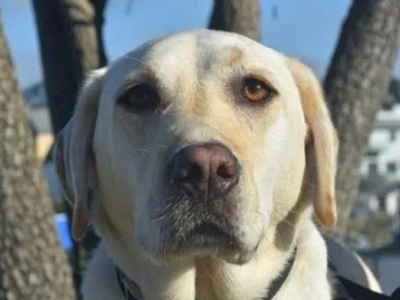
Credit: King's College London
Scientists from King’s College London and the Royal Veterinary College are building a database of the DNA of the most common dogs breeds. The tool can be used to crack crimes, by helping to identify the type of dog that might have been present at a crime scene.
The database has mapped out DNA from Labradors, Dachshunds, Cocker Spaniels, Pugs and many more. Dogs may be directly involved in a crime, when attacking humans or livestock, but are also frequently bystanders to illegality and can lead police to a human suspect. They may leave their hairs or saliva at a crime scene, or on a victim, which can be analysed for evidence.
Scientists compare DNA found during police investigations with samples from dogs they suspect are present at a crime. They can also use the information to infer the likely breed or dog type.
While analysis of human DNA is a common area of forensic research, scientists at King’s believe detectives are missing a trick in testing for DNA from dogs at crime scenes.
“Dogs are such a big part of our lives – but often overlooked in forensics. They can leave traces of their DNA at crime scenes, potentially transforming investigations," said Denise Syndercombe Court, forensics expert at King’s College London.
This research is the first time the King’s College London team have mapped the DNA of animals – having focused the majority of their work on humans – and they have already used their expertise to help Police solve crimes.
“In one case, we identified a Staffordshire Bull Terrier who attacked a police officer. The owner, having denied their pet’s involvement in the attack, provided a mouth swab from their dog. This was used to provide one billion times likelihood that the crime scene stain came from the suspect's terrier – confirming it was very likely that dog had attacked the police officer," said Syndercombe Court. “In another case, a person was accused of causing a man to fall and badly injuring him, but the accused said that the other man's dogs had been set on him and that the injuries to the accuser were because the man had tripped over his own dogs. Evidence of damage to the accused's t-shirt revealed likely non-human saliva with canine DNA from two dogs. This evidence was used to support the case in defence.”
The team have also identified dogs who attacked livestock, a problem which can be incredibly costly for farmers.
“While we haven’t done this analysis to date, we also have the tools to identify the DNA of dog hairs left at crime scenes – so it might be possible to track down owners involved in crime using this technique,” said Syndercombe Court.
Two police forces have already worked with the King’s team to help implement dog DNA analysis as part of their investigations.
“Working with dog DNA represented a great challenge given the large number of breeds studied. It is so surprising to see how much shared DNA material is within dogs from the same breed and extremely rewarding to see my research already applied in active forensic casework, said Federica Giangasparo, who developed the canine database as part of her PhD at King’s College London.
In further research, Syndercombe Court wants to expand the DNA database to include dangerous dog breeds, helping to solve cases where people have been attacked or even killed by dogs.
Read the study, published in Forensic Science International.
Republished courtesy of King's College London