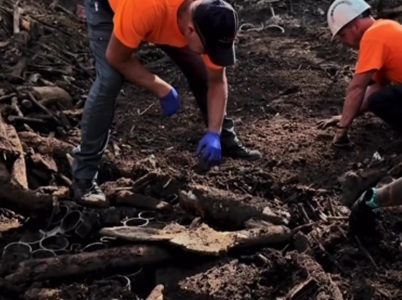
Snapshot from a video posted in remembrance of Nancy Tucker by the Washington County/Johnson City Emergency Management Agency.
On Sept. 26, 2024, Hurricane Helene made landfall in Florida as a Category 4 hurricane before traveling North, causing catastrophic flooding and extreme winds. Over the next three days, Hurricane Helene would cause $78.7 billion in damages and at least 253 deaths, making it the second-deadliest hurricane to strike the continental U.S. in 50 years.
Eighteen of those deaths were in Tennessee. Seventeen of those victims were recovered in the aftermath of the storm—everyone except Nancy Tucker.
Now, almost two years to the day, the Washington County/Johnson City Emergency Management Agency (WCJCEMA) has confirmed the recovery and identification of Tucker, the last person missing in Washington County.
“For over 700 days, one part of that day remained unfinished,” said WCJCEMA in a video. “Thousands of hours were spent walking riverbeds, searching debris and returning to places already searched before. First responders, search teams, volunteers, neighbors and partners kept coming back. We promised we would never give up. She’s home.”
Search, rescue, identification
The breakthrough in the search occurred on Saturday, Sept. 12 as Washington County/Johnson City EMS personnel, an archaeologist and debris removal crews continued debris removal on Jackson Island.
During the work, they located what were believed to be the remains of a person. Operations were immediately suspended and the area was left undisturbed.
The remains were taken to the medical examiner at the William Jenkins Forensics Center at East Tennessee State University. Within a day, the examiner was able to confirm Tucker’s identity through dental records.
Tucker and her husband, Jim, lived about 4.5 miles upstream from Jackson Island. Jim Tucker was found dead in the Jackson Bridge area shortly after Helene struck.
Jackson Island complications
Due to recent debris-clearing progress, the search for Tucker’s remains moved to Jackson Island in August, a little more than three miles from where she was last believed to have been seen.
Along the 24-mile Nolichucky River system that surged during the hurricane, Jackson Island (part of Cherokee National Forest) is the last place to be cleaned up—a fact that has been criticized by local residents in the past couple years.
At a press conference announcing the identification of Tucker, Washington County Mayor Joe Grandy said delays occurred because the island is Federal Forest Service property as well as a scared burial ground for Native Americans who inhabited the land previously.
“It took a long time for [federal agencies] to allow the cleanup to begin,” Grandy said. “It was frustrating.
If the K9s would have alerted to human remains or the team had a high probability guess, Grandy says he believes more could have been done in the immediate aftermath of the hurricane. But, on the first few walkthroughs of the dangerous island, nothing was found.
In addition to red tape delays, Jackson Island is 80 acres, with hurricane debris piles reaching 50 feet high and 100 feet long. Still, Grandy said, the focus has always been on bringing Tucker home.
“The cleanup was important. It needed to happen. It was going to happen. But the recovery of Mrs. Tucker was always the number one priority for us, and we emphasized that to the federal people,” said the mayor.