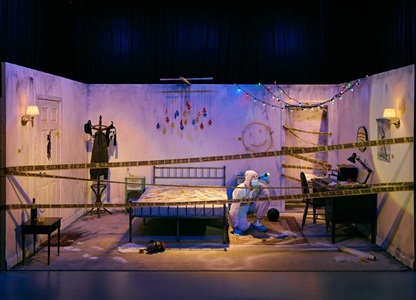
Credit: University of Lincoln
What would a real forensic scientist make of Se7en‘s infamous Sloth scene?
Brett Harman, better known as Brettflix, is on a mission to find out.
After interviewing some of Hollywood’s biggest names, including Steven Spielberg, the University of Lincoln (UK) graduate is returning to his roots to pair cult classics with expert insight in Crime Scenes of Tinsel Town.
The new video series dives beneath the surface of some of cinema’s most unforgettable moments, exploring everything from forensic investigations and criminal behaviour to filmmaking, storytelling and set design.
Using scenes from iconic films and TV series as a starting point, each episode brings real-world expertise to the stories on screen, revealing where Hollywood gets it right, where creative licence takes over, and why these films continue to captivate audiences decades later.
Across five episodes, experts in Forensic Science, Criminology, Creative Writing, Film Production and Set Design take on everything from the evidence left behind at a crime scene to the psychology of fear and the filmmaking tricks that keep audiences on the edge of their seats.
“Working on Crime Scenes of Tinsel Town has been such an amazing experience, and also incredibly insightful. It was fascinating to bring together the worlds of film and television with real-life expertise, hearing from professionals who spend their careers studying crime, forensics, and psychology," said Harman.
Filmed on the university’s specially created Crime Scenes of Tinsel Town set, Harman steps into recreations of some of cinema’s most infamous crime scenes – from the shower in Psycho and the bed at the centre of Se7en’s disturbing Slothn sequence, to nods to horror and crime classics including Scream and The Silence of the Lambs.
“Whether we were analysing the famous shower scene in Psycho, discussing the psychology behind The Shining, or exploring how accurately films portray forensic investigations, every interview deepened my understanding of how fiction compares with real-life investigations," said Harman. “I hope audiences come away not only entertained, but also with a greater appreciation for the science, research and expertise behind real-world investigations – while seeing some of their favorite films and TV shows in a completely new light.”
The first episode, available now on the University of Lincoln’s YouTube channel, sees Harman joined by Anthony Ellis, Associate Professor in Criminology at the University, to explore the criminology behind some of cinema’s most infamous killers.
Dissecting the motivations behind the crime of John Doe in Se7en, Ellis, draws on his own experience interviewing men who have committed violence, revealing that “nearly all of them believed that what they had done was right,” and exploring how “the idea of justice and morality underpins all violence that humans commit.”
Guy Mankowski, Senior Lecturer in Creative Writing at the university, also joined Harman for an episode to discuss the writing behind iconic psychological horror The Shining. The “Here’s Johnny!” scene from Stanley Kubrick’s adaptation of Stephen King’s novel of the same name was recently revealed to be the most memorable crime scene from TV and film in a nationwide poll commissioned by the University.
"Having been sufficiently spooked by the nightmarish detail of the Tinsel Town set, it was good to talk through what makes The Shining – a film I’ve long been obsessed by – so terrifying, with someone as in-the-know as Brett," said Mankowski. “I think when we don’t know why a film scares us as much as it has, we keep going back and being scared by it afresh to try to understand it! Circling the topic with Brett it became apparent to me that Stephen King’s genius is that his characters don’t merely have depth, as novelists like me might aspire to – they can become symbols for generational trauma and the idea we might be caught up in such a role in our lives is terror on a whole new level.”
Data from Unviersity of Lincoln