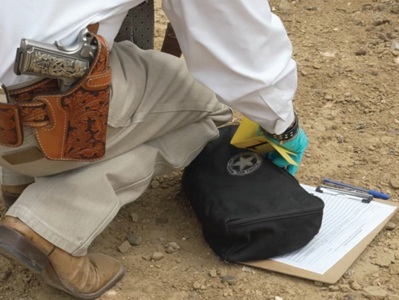
Credit: Texas Rangers
The Texas Department of Public Safety (DPS) is proud to announce the expansion of the Texas Rangers’ Unsolved Crimes Investigation (UCIP/Cold Case) Program, a specialized unit dedicated to solving cold case murders and sexual assaults across the state.
“For nearly 25 years, the Texas Rangers Cold Case Program has helped partner law enforcement agencies bring justice to victims and their families in every corner of Texas,” said Texas Ranger Division Chief Scotty Shiver. “The expansion of this program is a testament to the Rangers’ success in working alongside investigators and forensic scientists to identify and arrest criminals who, sometimes for many years, have believed they have gotten away with committing some of the most heinous crimes. As forensic science and technology continue to advance, so will our ability to make a bigger impact in our state – putting more violent criminals behind bars and making Texas communities safer.”
Under Senate Bill 1, passed by members of the Texas Legislature and signed into law by Governor Greg Abbott last year, the department was awarded funding to support new positions under the Texas Rangers’ Cold Case Program – bringing the number of personnel assigned to this specialized unit to 17 Rangers and three support staff, doubling the size of the program.
The new Texas Ranger Cold Case Program positions include the following:
- One additional Texas Ranger specializing in cold case investigations assigned to each of the six Texas Ranger companies across the state. Previously, each company had a single Texas Ranger assigned to investigate unsolved murders and sexual assaults in their area.
- A second Staff Lieutenant position has also been added to the Texas Rangers’ Cold Case Program to help supervise additional Rangers joining the unit, as well as to assist two Rangers specifically assigned to work the statewide Sexual Assault Kit Initiative (SAKI) program. The SAKI Program, funded by the Department of Justice/Bureau of Justice Assistance (DOJ/BJA), provides investigative funding for agencies across the United States to further unsolved sexual assaults and sexually related homicide investigations.
Created by the 77th Texas Legislature in 2001, the Texas Rangers’ Cold Case Program provides Texas law enforcement agencies with a process for investigating unsolved murders or what appears to be serial or linked criminal events. Since there is no statute of limitations on the offense of murder, the state has the moral and statutory obligation to pursue these cases to a successful resolution, or until no other viable lead remains. Members of the Texas Rangers’ Cold Case Program also regularly assist law enforcement agencies in advanced testing of DNA evidence to solve sexual assault cases across the state.
The Texas Rangers’ Cold Case Program has helped solve over 300 cases, including more than 156 sexual assaults since the SAKI program was launched in 2020. The program has also helped uncover the identities of a dozen unidentified human remains since 2020.
You can read about some of the Texas Rangers’ most recent solved cases here:
Republished courtesy of Texas Rangers