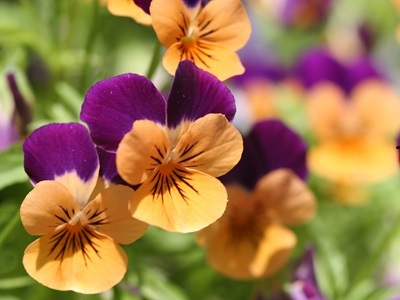
Anthocyanins give these pansies their dark purple pigmentation. Credit: GFDL
A leading American forensic chemist will collaborate with Curtin University researchers to develop low-cost, rapid detection tools for dangerous and illicit substances, using naturally occurring plant pigments.
Provost Associate Professor of Chemistry at American University, Raychelle Burks, will spend time at Curtin in 2026–27 as a Fulbright U.S. Scholar, following an award from the U.S. Department of State and the Fulbright Foreign Scholarship Board.
Working with Simon Lewis and Georgina Sauzier from the Forensic and Analytical Chemistry Research Group within Curtin’s School of Molecular and Life Sciences, Burks will investigate how anthocyanins, which are natural pigments found in plants, can act as color-based sensors to detect substances of international concern.
The research aims to deliver faster, more accessible screening methods for substances such as illicit drugs, explosives and chemical warfare agents used in a wide range of environments.
Burks said the project was driven by a shared commitment to “frugal forensics” and developing reliable, high-quality forensic tools that remain effective even in resource-limited settings.
“Anthocyanins are globally abundant and highly responsive compounds, making them promising candidates for simple, low-cost chemical detection,” Burks said. “I’m excited to collaborate with Curtin researchers to explore how these natural materials can be harnessed to improve safety and detection capabilities worldwide, particularly in regions where access to advanced forensic technologies is limited.”
Lewis said the collaboration will strengthen Curtin’s growing expertise in innovative and accessible forensic science.
“This partnership brings together complementary strengths to tackle complex detection challenges in a practical and scalable way,” Lewis said. "It’s an exciting opportunity to advance new approaches that could make forensic science more equitable and widely available.”
Republished courtesy of Curtin University