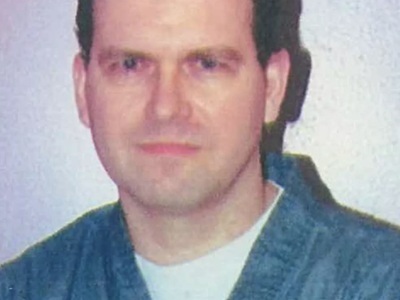
Credit: The Innocence Project
The 21st Judicial District Attorney’s Office dismissed the double murder charges against James “Jimmy” Genrich’s related to a series of pipe bombings that occurred in Grand Junction, Colorado, between 1989 and 1991. The State’s only direct evidence in this case was toolmark “matching” evidence — a forensic method now widely discredited as scientifically unreliable.
The dismissal follows a court decision that granted Genrich a new trial due to the use of this faulty toolmark analysis in his 1993 conviction. At his 1993 trial, the State claimed that microscopic marks measuring less than a quarter millimeter on the bomb fragments could be traced to a single tool to the exclusion of all others. Leading scientific institutions, including the National Academy of Sciences and the President’s Council of Advisors on Science and Technology, have rejected such claims as unsupported by science.
Both the District Attorney’s Office and the Grand Junction Police Department ultimately concluded that a retrial is “no longer legally or practically viable.” The District Attorney’s Office sought dismissal because they could not prove their case beyond a reasonable doubt.
Genrich, who had no prior criminal record and no connection to the victims, has always maintained his innocence — even presenting alibi evidence at trial. After the prosecution’s aggressive reinvestigation of this case, new evidence of Genrich’s innocence was uncovered, including:
- A previously undiscovered fingerprint recovered from the crime scene that does not match Genrich.
- Independent opinions of two toolmark experts who were sent crime scene evidence and found no connection between any of Genrich’s tools and the pipe bombs. In fact, the toolmarks showed largely dissimilar microscopic details to Genrich’s tools.
- The State interviewed Genrich’s past and present cellmates in search of jailhouse informants who could support the prosecution’s version of events and found none.
At trial and again during the reinvestigation, the State unsuccessfully attempted to enlist Genrich’s own family members — including his brother and mother — to record incriminating statements implicating him. The State also ignored other potential suspects, including people known to be involved with explosives. Instead, they focused solely on Genrich based on the discredited toolmark analysis theory.
Despite the dismissal, Genrich remains incarcerated on related explosives charges and is serving a 72-year sentence. The same discredited evidence used in the murder conviction was also the only evidence used to secure these remaining convictions. However, earlier this year, the Mesa County District Court ruled that Genrich could not challenge those convictions because of a filing deadline missed by his prior legal counsel. That ruling is currently being appealed in the Colorado Court of Appeals.
Republished courtesy of The Innocence Project