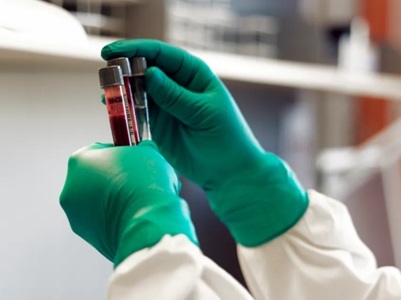
Credit: Swedish National Board of Forensic Medicine
Currently, medical examiners use body temperature, rigor mortis and the amount of potassium in the vitreous of the eye to determine time of death. While those methods can be accurate for people who are found soon after death, they yield less accurate results when a few days have passed since time of death. Researchers at Linkoping University (Sweden) recently turned to artificial intelligence to provide a more precise time of death in these situations.
When the body dies, a number of biological processes set in. Organs and tissues begin to break down, leading to changes in small molecules in the blood, called metabolites. They are broken down in a predictable way that correlates with how much time has elapsed since the time of death. This is what enables medical examiners to assess actual time of death in an individual.
Working with the Linköping University team, researchers at the Swedish National Board of Forensic Medicine collected more than 45,000 blood samples from autopsies over a period of 10 years. Of the 45,000 samples, 4,876 with known post-mortem interval were used to train an AI model by analyzing the metabolites in the blood samples.
According to the study published in Nature Communications, the researchers showed their new model could predict the time from death to autopsy with a precision of about 1 day—even for those deceased for up to 13 days.
In training the AI model on so many samples, the researchers “accidentally” created a new, unique database of blood samples, which can be used beyond forensic applications since metabolites can indicate drugs, pharmaceuticals, toxins, disease and more.
“This is a gold mine of data,” said lead author of the study Rasmus Magnusson, postdoctoral fellow at Linköping University. “But we were also able to show that there is no need for such large amounts of data as previously thought. A few hundred individuals are enough to build corresponding models, which makes our method useful even in laboratories worldwide that don’t have access to as much data.”
Magnusson’s research team describes their recent project as “high risk,” saying they did not necessarily expect the model to be so accurate.
“We knew that many external factors affect body decomposition and were surprised that the signal from the body’s metabolites was so strong when it comes to predicting the post-mortem interval,” said team member Elin Nyman.
Today, the data set provides information on only the date of death, not time. So, the team says their next step is to produce a data set with more precise information about the time of death, and then train models that will provide more reliable estimates of the post-mortal interval, including being able to determine which part of the day a death occurred.