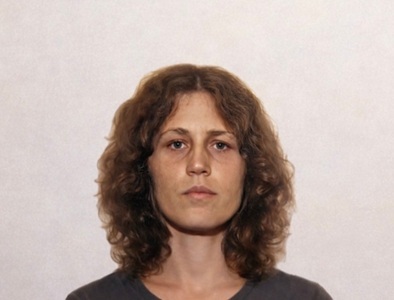
Credit: Othram
In January 1985, the skeletal remains of a woman were found in a densely wooded area in Malabar, Florida, a small town southeast of Orlando on Brevard County's Atlantic coast. The town is part of the Palm Bay–Melbourne–Titusville Metropolitan Statistical Area. Working together, the Brevard County Sheriff's Office and the District 18 Medical Examiner's Office began an investigation and collected evidence. The woman was estimated to be between 20 to 50 years old and between 5'0" and 5'7" feet tall. She had no identification and her identity could not be determined.
Despite extensive investigative efforts at the time, the case went cold. The woman became known as Malabar Jane Doe and details of the case were entered into the National Missing and Unidentified Persons System (NamUs) as UP116034.
In 2024, using grant funds from the Federal Bureau of Justice Administration's Missing and Unidentified Human Remains (MUHR) Program (FY22-MUHR), the Florida Department of Law Enforcement (FDLE), in coordination with the Brevard County Sheriff's Office and District 18 Medical Examiner's Office, facilitated the submission of forensic evidence to Othram for advanced DNA testing. Using Forensic-Grade Genome Sequencing, Othram scientists successfully developed a comprehensive DNA profile suitable for forensic genetic genealogy.
This profile enabled FDLE’s forensic genetic genealogy team to conduct a genetic genealogical search to generate new investigative leads, enabling law enforcement to conduct a follow-up investigation and narrow in on the woman's possible identity. The investigation resulted in the positive identification of Malabar Jane Doe, who is now known to be Jeanette Marcotte, who was missing from Vancouver, British Columbia.
Jeanette Marcotte was last seen in Saskatchewan in 1981 or 1982, three years before her remains were found in Florida. Prior to her disappearance, it is reported that Marcotte said she was headed to Vancouver, British Columbia. She was never seen again.
Individuals who have taken a consumer DNA test can aid ongoing forensic investigations by joining the DNASolves database. Expanding the pool of available DNA data increases the likelihood of successful identifications, helping to reunite families with their missing loved ones and resolve cases that have remained unsolved for years.
This is the 51st publicly announced case in the State of Florida where officials leveraged Othram’s identity inference pipeline.
Republished courtesy of Othram/DNASolves