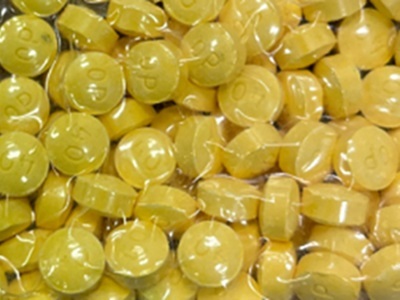
Nitazene found in yellow and green fake oxycodone tablets. Credit: High Alert (New Zealand)
At a recent symposium on emerging global synthetic drug threats, multiple countries reported an increase in the number of deaths linked to nitazene use—including North America, Brazil, Australia, New Zealand and more.
Benzimidazoles, also known as “nitazenes,” are a potent class of synthetic opioids estimated to be 1.5x to 20 times more potent than fentanyl compounds.
The Colombo Plan and the Center for Forensic Science Research & Education (CFSRE), who sponsored the global symposium, recently released the following data on increasing reports of nitazene toxicity worldwide.
North America
According to CFSRE, the most common nitazene drugs in the U.S. in the third quarter of 2024 include protonitazene, metonitazene, and N-pyrrolidino protonitazene.
In 2023, nitazene tablets destined for Florida, Connecticut and Brazil containing an average of 29 mg of metonitazene across multiple shipments were seized in the U.S. from international express mail.
Brazil
Nitazenes were the most frequent drugs detected in the opioid seizures that took place in São Paulo, Brazil between July 2022 and April 2023. During this time period, there was a total of 140 opioid seizures with 95% of those linked to nitazenes. Specifically, metonitazene was detected in 125 (72%) of the cases. Some of the drug samples were mixed with other active compounds, including the synthetic cannabinoid MDMB-4en-PINACA (30%).
The remaining 5% of seizures were linked to other opioids, mainly morphine and fentanyl.
Europe
The EU Early Warning System reported six new nitazene compounds in the European drug supply in 2023. The presence of nitazenes is concentrated in Lithuania, Latvia, Estonia, Poland, Sweden and Finland. Nitazenes were also detected in a counterfeit oxycodone seizure in Sweden, and in a seizure of counterfeit buprenorphine tablets in Finland.
Australia
The Victorian Institute of Forensic Medicine at Monash University in Melbourne has reported deaths linked to isotonitazene (2021), and etodesnitazene (2022). There are indications of an increase in nitazene deaths across Australia in 2023 and 2024, with the most commonly detected drugs being protonitazene, metonitazene, and N-pyrrolidino etonitazene, with some cases testing positive for multiple nitazenes, including butonitazene. The Australian Alcohol and Drug Foundation in 2024 has also reported several cases of counterfeit drugs containing nitazenes often mixed with designer benzodiazepines such as Bromazolam.
New Zealand
A New Zealand drug checking service reported in May 2024 the presence of N-desethyletonitazene in a counterfeit tablet being sold as a benzodiazepine. The group has previously reported metonitazene in yellow tablets and powders as early as 2022, and either N-pyrrolidino-protonitazene or N-pyrrolidino- isotonitazene in an orange powder.
UK
Between June 2023 and May 2024, the UK’s National Crime Agency has confirmed over 179 deaths involving nitazenes in the country. Protonitazene, N-desethyl isotonitazene, metonitazene and N- pyrrolidino protonitazene are the most commonly detected nitazenes in this time period.
Ireland
In 2023, N-pyrrolidino protonitazene was linked to 77 cases in Dublin City and Cork City, Ireland. Fifty-seven cases were fatal, 20 were non-fatal overdoses. In 2024, additional outbreaks both fatal and non-fatal related to protonitazene were reported, including one in a prison involving N-pyrrolidino protonitazene. Some seized samples containing protonitazene were yellow tablets packaged in counterfeit blister packs and labelled as alprazolam.