by Bode Technology
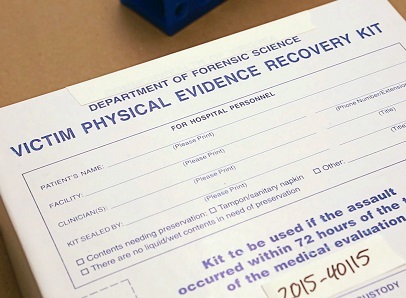
When the Department of Justice launched the Sexual Assault Kit Initiative (SAKI) in 2015, it was an ambitious and uncertain endeavor. The program was built on the belief that every sexual assault kit (SAK) matters, and that every survivor deserves answers. However, very few jurisdictions had the resources to meaningfully address cold case sexual assaults.
Simultaneously, the criminal justice system was just beginning to learn the importance of adopting a victim-centered approach to these investigations. Knowledge about how trauma affects victims’ memory, behavior, and reporting was emerging, but widespread understanding was limited. Investigators and prosecutors were increasingly recognizing that survivors must be believed, supported, and heard, regardless of how much time had passed since their assault — and that effective investigations depend on this foundation of trust and care.
However, in 2015, many unknowns about sexual assault cases existed:
- How many unsubmitted kits actually existed nationwide?
- Would agencies apply for funding?
- Would cases be solved, offenders held accountable, and survivors — many who had waited and struggled for decades — finally receive answers and justice?
- Would the federal government’s investment truly create systemic change in the way sexually motivated violent crimes are investigated and prosecuted?
Ten years later, the answer is clear: YES.
The impact of SAKI is undeniable. What began with just 20 grantees in 2015 has grown into the largest cold case program in the country (arguably, the world), with over 100 grantees spanning 45 states. This expansion represents more than just numbers, it represents a transformational shift in how our nation addresses violent, sexually motivated crimes. This widespread movement has improved our understanding of trauma-informed practices, holds offenders accountable, prevents recidivism, and most importantly, delivers long-awaited answers for survivors.
By funding evidence testing, investigative resources, and victim advocacy, SAKI has created space for a victim-centered approach to investigations and prosecutions. This program recognizes that survivors’ voices and experiences must be central to the pursuit of justice. Believing survivors, supporting them when they come forward, no matter how much time has passed, and building trauma informed investigative practices are essential to accountability and healing.
The National Impact
These high-level statistics show the transformative power of federal funding dedicated to cold-case sexual assault investigations and a remarkable story of progress:
- 101,100 kits sent for testing
- 97,402 kits tested to completion
- 39,171 DNA profiles uploaded to CODIS
- 19,035 CODIS hits (including 2,830 to serial sex offenders and 10,176 to serial violent offenders)
- 30,233 investigations initiated
- 1,538 convictions secured
Each one of these statistics represents a survivor, a family, and a community impacted by violence — and a growing body of work that is helping law enforcement better understand offender behavior within and across jurisdictions.
More Than Testing Kits
While untested sexual assault kits remain at the heart of SAKI, the program has evolved into a comprehensive effort that now spans six purpose areas. From supporting small and rural agencies to implementing sustainability plans, collecting lawfully owed DNA, and applying advanced DNA technologies such as Forensic Investigative Genetic Genealogy (FIGG), SAKI is changing the landscape of violent crime investigations nationwide.
This breadth of support has not only advanced justice but also guided how agencies across the country approach cold cases — creating a lasting legacy that extends far beyond the original mission. This expansion also recognizes that sexual assault offenders often engage in other violent crimes, addressing the full spectrum of offending behavior helps prevent recidivism while delivering justice across jurisdictions
The Role of DNA Testing
DNA testing remains at the core of SAKI’s success. The sheer volume of cases and the complexity of aging evidence often requires advanced methodologies and the support of private laboratories. Bode has worked with over 60 SAKI grantees to date, assisting with large volumes of SAKs, specialized testing on secondary evidence and homicide cases, and the use of FIGG. Partnerships like these ensure evidence is processed efficiently and optimally, keeping cases moving forward.
Ventura County: Turning Kits into Answers
Nowhere is SAKI’s impact clearer than in the work of local teams who are tirelessly pursuing justice in their own communities. Ventura County, California, is a powerful example. Over just two years, their SAKI program has reviewed and tested nearly 2,000 cases, producing results that have rippled across the country.
Case Example 1: Cross-Country Serial Offender
Ventura County investigators uncovered a chilling pattern: DNA testing connected two Ventura cases from 1982 and 1983 to three additional assaults in Michigan and Ohio. With help from the FBI’s Violent Criminal Apprehension Program (ViCAP) and a genealogist in Columbus, investigators identified the perpetrator as Sean Patrick McNulty, a former Ventura resident.
McNulty’s crimes stretched across decades and states — Okemos, Michigan (1994); Birmingham, Michigan (1995); and Columbus, Ohio (1997). In 1993, he was named a suspect in another rape in Bloomington, Indiana, but that kit went untested until this investigation decades later. McNulty ultimately died by suicide in 1997, shortly after being named a suspect.
While he will never stand trial, the answers provided through Ventura’s SAKI work have been life-changing for survivors. One Ventura victim said she had been “waiting forty years” for closure. The case is a powerful reminder that even when a suspect is deceased, testing kits matters—because every answer has the potential to bring healing, connect cases across jurisdictions, and give survivors their voice back.
Case Example 2: Phoenix Indictment
Another Ventura case from 1994 became the breakthrough investigators in Phoenix, Arizona, had been waiting on for decades. In the 1990s, several women in Phoenix endured brutal sexual assaults. DNA was collected, but the profile produced no matches in CODIS. For years, investigators pursued every avenue—including genetic genealogy and familial DNA searches—but the suspect remained unidentified.
That changed when Ventura’s SAKI team tested a 1994 California kit tied to a named suspect, Abraham Ramirez. When that DNA was uploaded to CODIS, it matched the Phoenix assaults. The lead provided the final link Phoenix investigators needed, resulting in an indictment in four cold cases.
For the survivors, this was a turning point—proof that their cases were never forgotten. For law enforcement, it reinforced that CODIS remains one of the most powerful investigative tools we have, and that even cases decades old can be advanced through collaboration and persistence.
These successes underscore the power of SAKI: connecting cases across state lines, elevating survivor voices, and ensuring that cases once deemed cold are not forgotten.
Looking Ahead
At Bode Technology, we are humbled to have partnered with SAKI jurisdictions across the country, supporting their efforts through advanced DNA testing. While our role is just one part of a much larger collaboration, we are proud to stand alongside law enforcement, prosecutors, advocates, genealogists, and — most importantly — survivors in this mission.
As SAKI marks its 10th anniversary, the program has not only reshaped how unsubmitted kits are addressed but has also forever changed the way violent crimes are investigated. The program’s success is a testament to the people committed to this work — from the federal government that provides dedicated funding, to the agencies and advocates on the frontlines, and the survivors whose voices remain at the center.
Together, they are building safer communities, advancing justice, and ensuring that no case, no survivor, and no kit is ever forgotten.