by Kevin Knopp, CEO & Co-Founder, 908 Devices
Whether a first responder is attending to a suspected fentanyl incident, a chemical spill or a natural disaster, response time is one of the most important factors in emergencies. Even though technology has evolved, traditional laboratory chemical analysis of substances can take weeks to determine results. First responders demand real-time, actionable intelligence, which is why there’s an increased shift toward in-field analysis that brings the lab directly to the front lines.
A growing demand for faster, smarter response tools has grown in parallel with the complexity and frequency of threats, such as the opioid crisis and airborne chemical hazards from wildfires. Synthetic opioids like fentanyl and nitazenes are incredibly potent and often mixed with other substances, making identification difficult and dangerous. Furthermore, today’s first responders are exposed to a myriad of chemicals due to runoff, improper disposal or leaks during environmental disasters, challenging traditional response protocols, and posing risks to public safety.
The Front Lines of the Opioid Crisis
While it’s been heartening to see a decline in drug overdose deaths, continued vigilance is imperative. Cartels and illicit drug manufacturers adapt quickly by modifying molecular structures to create new synthetic opioids, which are often more lethal in smaller doses and are nearly impossible to detect. For instance, a rise in nitazenes, a synthetic opioid 40x more powerful than fentanyl, has raised red flags from law enforcement and governmental bodies, especially as it’s often cut into cocaine, fentanyl and other drugs—with no way to tell by sight alone.
With these more potent drugs, in-field trace analysis of new and emerging drug threats is becoming more essential, especially as the alternative is waiting days or weeks for lab analysis. It can make a difference in saving lives, reducing the national overdose crisis, and protecting first responders themselves. Without reliable in-field detection tools, frontline personnel are left at a disadvantage.
Ultimately, building a robust and responsive detection infrastructure is key to disrupting the synthetic drug supply chain, protecting communities from hazardous chemicals, and supporting a more informed public health response.
Environmental Hazards in an Industrial World
Beyond drug enforcement, first responders need to adapt to today’s natural disasters and emergency situations that require faster action due to the hazards associated with more synthetic materials.
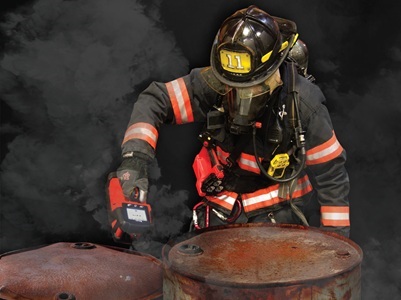
The reality for many first responders is that incidents are rarely presented as textbook cases. Whether dealing with the aftermath of a suspected clandestine lab, a transportation-related chemical spill or an industrial fire, responders must assess threats under pressure, often with limited information and time and with complex mixtures hindering remediation efforts. This uncertainty makes real-time, in-field detection capabilities not only valuable but essential.
In complex cases of natural disasters and environmental hazards, detection technology must be portable enough to access high-risk areas and identify complex or unknown chemical mixtures to support rapid decision-making. In disaster scenarios, understanding the magnitude of the threat—for example, determining the type and volume of chemicals in vapors—is critical to developing the right action plan. With portable tech, emergency responders can make informed decisions for proper PPE selection, decontamination protocols, site control, and the transportation or disposal of hazardous materials.
If these insights are delayed, it puts responders at risk and creates additional consequences and hazards for both those handling the threat and the public.
Real Life Applications of Real-Time, In-Field Insights
The stakes are higher than ever, and in-field technologies are being prioritized by local and national entities. For example, the Texas Department of Public Safety selected the MX908, a handheld chemical identification device, to support with fentanyl mitigation, illustrating growing institutional confidence in the reliability of this technology to protect citizens from the rise of synthetic opioids. Additionally, the Metropolitan Washington Council of Governments acquired the XplorIR handheld gas detection tool to enhance its ability to respond swiftly to homeland security threats. They now have the ability to identify and quantify over 5,000 unknown gas and vapor chemicals within seconds.
The national and global entities adopting handheld detection technologies understand the benefits are not simply convenience or speed; it’s about transforming response strategy to ensure responders are well equipped to handle today’s threats, from drug interdiction to hazardous material response and beyond.
Where In-Field Analysis is Heading
As emergency situations evolve and escalate, so will the tools and tactics used to confront them, including delivering lab-grade performance through portable, intuitive, and connected devices to improve in-field chemical analysis. The real breakthrough isn’t just in size or portability; it’s empowering frontline responders with actionable intelligence in real time.
This momentum is only expected to grow. Continued investment in R&D will focus on building tools that are faster, smarter and more interoperable to help frontline responders make critical decisions when dealing with synthetic drugs, hazardous chemicals and multi-threat compounds.
Embracing in-field chemical analysis is not just a technological upgrade; it's imperative for modern public safety.
About the author
Kevin Knopp is the co-founder & CEO of 908 Devices, a company revolutionizing chemical analysis with its simple handheld devices, addressing life-altering applications. Kevin is an experienced high-tech entrepreneur, inventor on more than 20 US patents and has authored more than a dozen publications.